The Tale Behind The Tune: “Movin’ On” by Bad Company
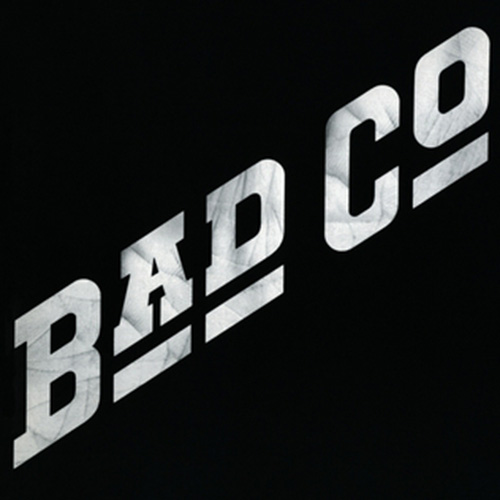
When Bad Company released their self-titled debut album in 1974, the record delivered a stripped-down, blues-rooted hard rock sound that quickly connected with audiences. Among its standout tracks was “Movin’ On,” a driving number written by guitarist Mick Ralphs that captured the restless rhythm of life on the road. Released as a single in the United States in January 1975, it followed the breakout success of “Can’t Get Enough” and reached No. 19 on the Billboard Hot 100 (and No. 30 in Canada). The song’s straightforward energy, Paul Rodgers’ soulful delivery, and Ralphs’ sharp guitar work helped make it a staple of classic rock radio and an enduring part of the band’s catalog.
The song predated Bad Company and Ralphs had composed it during his time with Mott the Hoople, where he served as a founding guitarist and frequent songwriter. Mott’s frontman Ian Hunter specialized in a more theatrical, often politically charged style. Ralphs’ material, by contrast, leaned toward everyday blues themes and the practical realities of the rock life. In interviews, Ralphs explained that songs like “Can’t Get Enough” and “Movin’ On” never fit Mott’s direction. “I had songs like ‘Can’t Get Enough’ and ‘Movin’ On,’ which we never used with Mott because Ian Hunter couldn’t sing them,” he said. “This is not a derogatory remark toward Ian — they were just not his style. He was more into screaming about politics, and I was into singing about being on the road and the usual things blues songs are about, the day-to-day things.” The mismatch contributed to growing creative tension, and Ralphs eventually left the band.
Before Bad Company recorded it, “Movin’ On” (sometimes styled “Moving On”) received an earlier release. In 1972 the British band Hackensack issued it as a single on Island Records. Hackensack had supported Mott the Hoople on tour, and Ralphs contributed to their version, including lap steel guitar by at least one account. Mott the Hoople themselves had demoed the song around the same period; a version later surfaced on archival releases such as the Mental Train box set. The Hackensack single gave the track its first public outing, but it was Bad Company’s version that brought it lasting recognition it still enjoys today.
The formation of Bad Company created the perfect vehicle for a sone like this. Ralphs connected with Paul Rodgers (formerly of Free) while the two were still involved with other projects. Rodgers responded immediately to Ralphs’ unused material and began singing the songs. Before long drummer Simon Kirke (also from Free) and bassist Boz Burrell (ex-King Crimson) completed the lineup. The new group recorded their debut album in November 1973 at Headley Grange in Hampshire, England, using Ronnie Lane’s mobile studio. The same historic location had famously hosted sessions by Led Zeppelin. Bad Company produced the album themselves and the resulting record featured a clean, powerful sound built around strong riffs, economical arrangements, and Rodgers’ distinctive voice.

“Movin’ On” sits firmly in that aesthetic. AllMusic critic Stephen Thomas Erlewine called it a blues boogie. Billboard described it as a “perfect ‘driving’ song,” praising Rodgers’ vocals, Ralphs’ staccato guitar work, and the pounding rhythm section. The lyrics paint a clear picture of the touring musician’s routine: waking up to another day on the road, packing belongings, racing to catch a taxi or flight, checking in with little time to spare, and boarding a plane for the next town on the itinerary. The chorus drives the point home—“And I’m movin’ on, movin’ on from town to town / Movin’ on, baby, never seem to touch the ground.” Contemporary reviewers noted how well the words matched the lifestyle of roadies and traveling bands. The track’s mid-tempo groove and steady pulse made it ideal for both radio play and the open road.
The song’s commercial performance reinforced its place in the band’s early success. Bad Company’s debut album reached No. 1 on the Billboard 200 and eventually earned multi-platinum status. “Can’t Get Enough” had already become a major hit; “Movin’ On” extended the momentum as the follow-up single, with “Easy on My Soul” (a Paul Rodgers composition) as the B-side. Critics and later retrospectives ranked it among the group’s strongest early tracks. Classic Rock History placed it high on lists of Bad Company’s best songs, calling it one of their most soulful and an FM deep-track favorite of the 1970s. Live versions appeared on subsequent releases, and the studio track later featured on compilations such as 10 from 6.
Several interesting details surround the song’s journey. It was one of three Ralphs compositions on the debut album (alongside “Can’t Get Enough” and a re-recording of “Ready for Love,” which Mott the Hoople had previously released). The contrast between Ralphs’ road-focused writing and Hunter’s more conceptual approach at Mott highlights how different creative priorities can shape a band’s direction. Once paired with Rodgers’ voice and the solid rhythm foundation of Kirke and Burrell, the song found its natural home. Ralphs’ guitar style suited the track’s locomotion theme perfectly.
“Movin’ On” endures because it captures a universal aspect of the rock experience without overstatement. The daily grind of travel, the constant motion, and the sense of never quite settling down remain familiar to anyone who has spent time on the road. Ralphs wrote it from personal observation during his Mott years, refined it through an earlier single, and saw it fully realized with Bad Company. More than fifty years later, the song still rolls with the same straightforward energy that defined the band’s breakthrough. It stands as a clear example of Ralphs’ gift for concise, groove-oriented rock that needs no elaborate framing to connect with listeners.