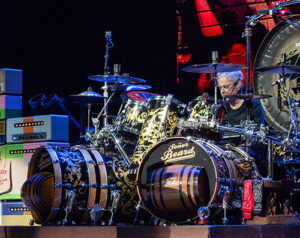
Fifty-two Years Ago A New Pulse is Heard in Pittsburgh: Neil Peart’s First Night with Rush
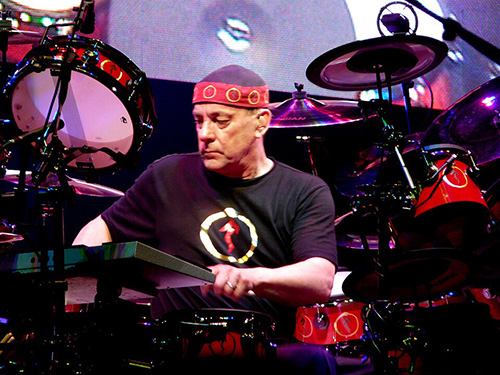
Photo by Matt Becker
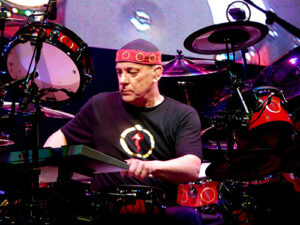
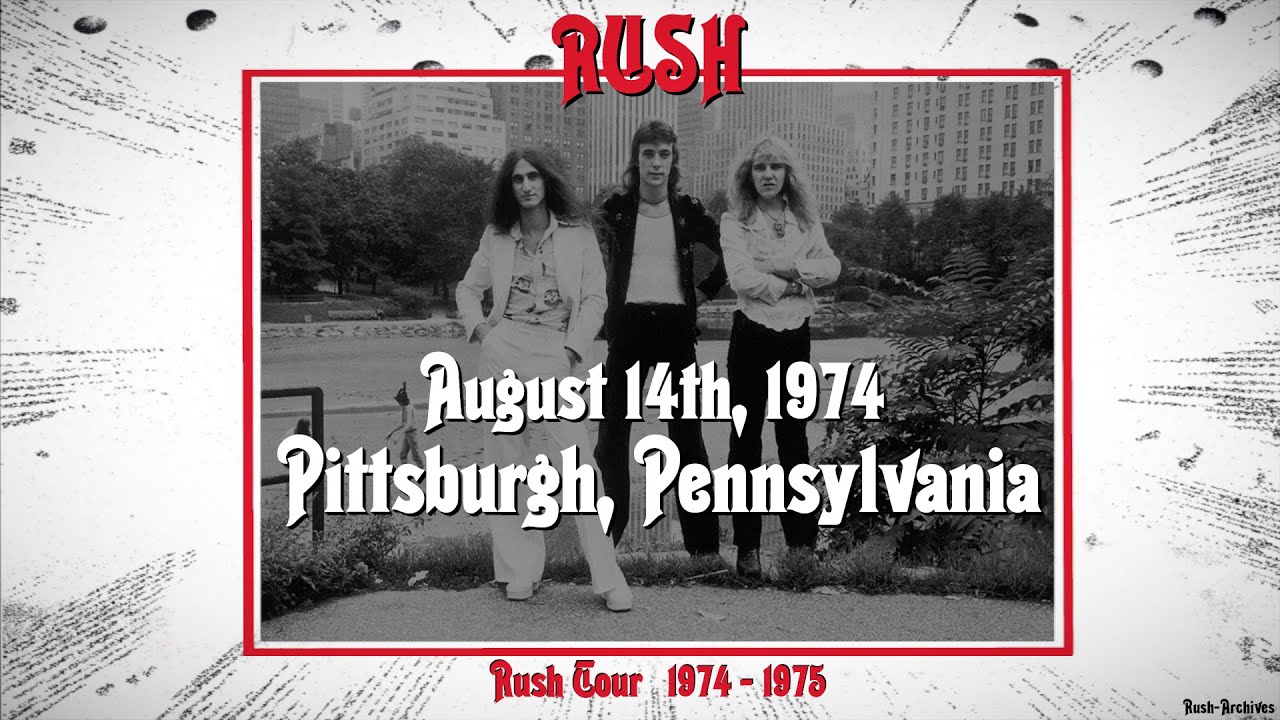
On August 14, 1974, a lanky 21-year-old Canadian drummer stepped onto the stage of Pittsburgh’s Civic Arena and quietly changed the course of rock history. And what a change it was! That night marked Neil Peart’s first performance with Rush. What began as a short, unadvertised opening slot in front of roughly 11,000 to 12,000 fans became the birth of one of the most innovative and enduring power trios in progressive rock.
Just two weeks earlier, on July 29th, Peart had officially joined the band after original drummer John Rutsey had departed in July as a result of health concerns and creative differences. Rush already had a self-titled debut album under its belt and a U.S. tour on the books. The pressure had to be intense. Peart, who had been working at his father’s farm equipment dealership in St. Catharines, Ontario, arrived at the audition in his mother’s Ford Pinto with his drums stashed in garbage cans. Geddy Lee and Alex Lifeson later admitted their first impressions focused more on his unconventional appearance than his potential. Then he played. The combination of power, precision, and restless creativity immediately convinced them. As Lifeson recalled in the documentary Beyond the Lighted Stage, Peart hit the kit like Keith Moon and John Bonham at the same time.
With only about two weeks to learn the band’s live repertoire, Peart threw himself into rehearsals. The stakes were high with Rush’s first major American tour set to open in Pittsburgh supporting Manfred Mann’s Earth Band and Uriah Heep. The Canadian trio was not even listed on some of the promotional materials. They were given a tight window of roughly 24 minutes.
The set that night was pure early Rush energy. According to surviving audience recordings and setlist records, the band opened with “Finding My Way,” followed by “In the Mood,” a cover of Larry Williams’ “Bad Boy,” and an extended “Working Man” that already contained embryonic sections of what would become “By-Tor and the Snow Dog.” Peart closed the brief performance with a drum solo that left no doubt about his technical command and ferocious drive. The audio quality of the circulating bootlegs is rough, dominated at times by Lee’s high-pitched vocals, but Peart’s playing cuts through with clarity and force.
Geddy Lee has offered mixed memories of the evening. In one account he admitted to sampling free Southern Comfort before taking the stage and the liquor hit him hard. “By the time I kinda came to my senses, the set was over and we were off,” he later said. In a 1974 interview he described the experience as “really kind of a scary thing, opening up with a new person in the band in front of so many people” and “kind of a freakout.” Years later he occasionally misremembered the exact date as August 16, but the historical record and Peart’s own writings confirm the 14th.
Peart himself preserved a more vivid and romantic recollection in his 2006 book Roadshow: Landscape with Drums. Looking back on the Civic Arena, he wrote of standing on the floor stage left while Uriah Heep performed “Stealin’.” He remembered the big dark building, the colored lights on the heroic figures onstage, the roaring audience, and the sheer electricity in the room. Halfway through the headliners’ set the arena’s famous retractable dome peeled open to the summer night sky. For a young musician who had recently been selling tractor parts, the moment felt life-changing.
Contemporary reviews were brief but telling. A writer for the Pittsburgh Press noted that the city preferred “heavy, slam-bang rock” and observed that Rush, “a promising Canadian trio,” delivered exactly that. The paper specifically praised “Working Man.” Another local outlet simply reported that the band “rocked in the preliminary.” Uriah Heep guitarist Mick Box later offered a more lasting assessment: the trio “nailed it” and were clearly headed up the ladder.
That single night in Pittsburgh surely launched more than a tour. It launched the classic Rush lineup of Lee, Lifeson, and Peart — the real Rush. Over the next four decades the band would evolve from hard-rock openers into progressive innovators, selling tens of millions of albums and building one of the most loyal fan bases in the history of rock. Peart’s drumming brought technical excellence combined with ambition and rhythmic complexity. His lyrics, beginning in earnest on the following year’s Fly by Night, introduced literary and philosophical themes rarely heard in mainstream hard rock. The chemistry that first sparked on that August stage in Pittsburgh carried Rush through concept albums, radio hits, arena headlining status, and even Rock and Roll Hall of Fame recognition (finally).
Fifty-two years later, the Civic Arena is gone, replaced by a new arena that still hosts major concerts. Yet the significance of August 14, 1974 remains. A young drummer with limited time to prepare stepped into an unfamiliar spotlight in a strange city and helped turn a promising Canadian trio into something far greater. The short set may have lasted less than half an hour, but the reverberations continue. For Rush fans, it is the night the Professor first took the stage and the band’s real story began.