A Night of Old Friends: Ritchie Blackmore’s Emotional Reunion with Deep Purple
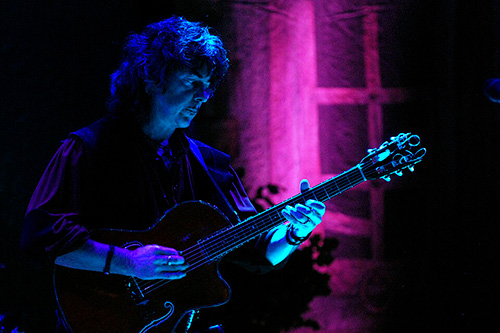
Photo by Nick Soveiko
For the first time in more than three decades, Ritchie Blackmore stepped onto a stage with Deep Purple. The historic moment came last week at Jones Beach in Wantagh, New York, when the guitarist who co-founded the band and helped define hard rock joined them for a single song: “Smoke on the Water.” What followed was less a polished performance than a quiet, powerful acknowledgment of time, age, and the bonds that outlast old arguments.
Blackmore, now 81, had not shared a stage with the group since leaving under strained circumstances after a show in Helsinki in November 1993. His relationship with singer Ian Gillan, in particular, had long been described as frosty. The two men, both strong personalities accustomed to leading, often clashed in the band’s earlier eras. Yet the idea for this reunion came from Blackmore himself. The day before the Jones Beach date, he woke up with a simple thought. It would be good for the fans, he reasoned, if he appeared for one song and showed that the old tensions no longer defined them.
His wife and Blackmore’s Night collaborator Candice Night reached out to Gillan. The singer’s response was warm and immediate. The idea made him smile, and the rest of the band gave their approval. Blackmore arrived with modest expectations and a 50-watt amplifier. He had not played a full-on rock gig since a Rainbow appearance in 2019 and wondered how he would fit into the current lineup featuring guitarist Simon McBride. Preparation time was limited. There was no lengthy rehearsal, no careful integration into the set. He simply walked on and played.
In a subsequent interview with Guitar Player, Blackmore reflected on the experience with characteristic directness and unexpected vulnerability. “It was very moving because I went on very quickly and had to play immediately,” he said. “I couldn’t warm up, but I wasn’t there to be playing correct notes. I was there to see old friends I hadn’t seen in 40 years and we’re all getting older. I think we realised it could be the last time we see each other, maybe.”
He admitted the performance was imperfect. “It was tricky. I didn’t play anything too technical, as I felt I should stick to the rudiments of being simple. I still lost my place at one point, but it’s not why I was there. I was there to heal any wounds – but there weren’t any wounds. Everyone was like, we were in the army, all along the Western front and we were all getting together again. Very emotional moment.”
That military analogy captures something essential about the night. Deep Purple’s classic lineup and its various successors have long been portrayed as a group of strong-willed musicians who survived their share of creative battles and personal friction. Standing together again after so many years, the remaining original members and their newer colleagues seemed to recognize the simple fact of survival. They had endured and they were still here. And for one song under the lights at Jones Beach, that was enough.

Gillan addressed the crowd afterward with visible pleasure as he called Blackmore the founding member, the great legend, the immortal, and invited him to the bar. McBride, who shares guitar duties in the current band, later posted a backstage photo and described the experience as an absolute pleasure. He called Blackmore an inspiration to all. The gestures were understated, yet they carried weight. No grand statements about future collaborations were made. Blackmore has given no indication that further appearances are planned.
For fans who have followed the long and sometimes turbulent history of Deep Purple, the reunion carried layered meaning. “Smoke on the Water” remains one of the absolute most recognizable riffs in rock, a song born from a real fire at a Montreux casino in 1971 and forever linked to Blackmore’s distinctive playing. Hearing him deliver it again with the band that made it famous felt both nostalgic and strangely contemporary. It was not a full-circle career reset or a carefully staged legacy event. It was a brief, human interlude in which aging musicians simply showed up for one another and for the audience that has kept their music alive.
Blackmore has spent recent decades largely away from the high-volume world of hard rock, focusing instead on the Renaissance-inspired music of Blackmore’s Night with Candice Night. His return to the heavy electric sound, even for a few minutes, required both courage and a certain humility. He chose simplicity over flash, presence over perfection. In doing so he reminded listeners that rock history is not only written in album charts and sold-out tours. Sometimes it is written in a single shared stage, a familiar riff, and the quiet recognition that time — as we experience it — is finite.
Whether this moment leads to anything further remains to be seen. What is clear is that the wounds Blackmore once thought might need healing had already closed. What remained was something rarer: mutual respect between people who once fought in the same trenches and now understand how precious those shared years have become. For one night in New York, Deep Purple and its founding guitarist stood together again. The music was familiar. The emotion was new. And for many who watched, it felt like a gift.